Meet Universal Robots
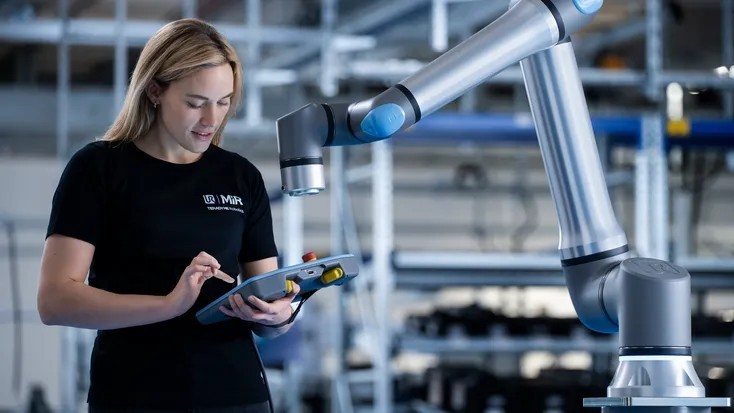
Universal Robots is a technology company that builds collaborative robots, with around 1,100 employees. Before working with the OKR Institute, the company struggled with goals that did not connect and teams that did not always pull together. The OKR Institute brought in a tailored Objectives and Key Results framework, backed by training, alignment workshops, and tracking tools, to fix those problems and give people a clear view of how their work fed the bigger picture.
For a fast-growing technology company, that kind of clarity is what keeps speed from turning into chaos.
Three Gaps Holding the Company Back
Universal Robots had three issues holding it back. The first was alignment. Departments and teams were often out of step with one another, which made it hard to execute strategy as one company. The second was goal setting itself. The existing approach was either too rigid or too vague, so targets were unclear and progress was hard to measure. The third was transparency. Without an open system, people at different levels could not easily see how their effort connected to the company's overall success.
The transparency gap was especially costly. When people cannot see how their work matters, motivation slips and effort scatters. Fixing that one issue had the potential to ease the others, because visibility tends to pull alignment and engagement along with it.
Training, Alignment, and Tracking Tools
The OKR Institute introduced a framework shaped to fit the company, and supported it with the right habits and tools.
- Customized OKR training: We ran workshops for leaders and teams to learn the method, with a focus on setting goals that were ambitious yet reachable and key results that could actually be measured.
- Alignment workshops: We held sessions to line OKRs up across departments, so everyone was working toward shared goals instead of separate ones.
- OKR tracking tools: We put software in place to track progress, raise transparency, and give teams real-time feedback so they could adjust as they went.
The tracking tools tied the whole effort together. With progress visible in one place, the alignment built in the workshops did not fade once everyone went back to their desks.
What Made it Work
- Tackling all three gaps at once: Alignment, goal clarity, and transparency were addressed together, not one at a time, which made the improvement stick.
- Visible progress: Tracking tools kept alignment alive after the workshops ended, preventing the usual fade back to old habits.
- Ambitious but reachable goals: The training taught teams to set stretch targets they could actually track, balancing ambition with measurement.
- Cross-department alignment: Workshops ensured every department pulled in the same direction toward shared objectives.
What Changed at Universal Robots
Stronger alignment and cohesion
Teams and departments lined up far better with the company's vision, working together toward shared objectives rather than pulling apart.
Better goal setting and execution
The OKR framework made goal setting clearer and more flexible at once, which improved both the clarity and the delivery of strategy.
More transparency and engagement
The new system opened things up, and people felt more engaged once they could clearly see how their work shaped the company's success.
What This Shows
Universal Robots is a clean example of how the three core problems with goals, poor alignment, fuzzy targets, and low transparency, tend to travel together. Fixing one without the others rarely works. The OKR Institute tackled all three at once, with training, alignment time, and a tracking tool that made progress visible. The lesson is that transparency is not a nice extra. When people can see how their work connects to the whole, alignment and engagement follow almost on their own, and the goals you set finally start to stick.