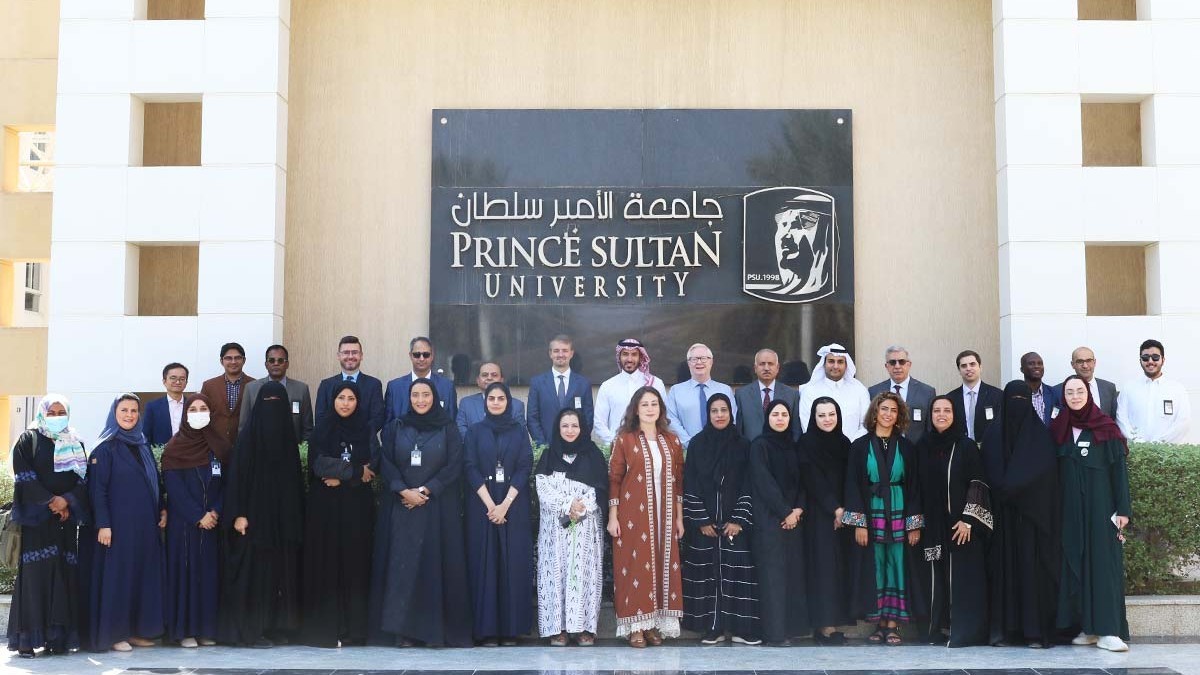
Meet Prince Sultan University
Prince Sultan University is a higher education institution in Saudi Arabia, with around 200 staff. The OKR Institute worked with the university's Strategic Planning team to connect Objectives and Key Results with the Balanced Scorecard framework. The coaching was led by Dirk Schmellenkamp. The aim was to strengthen strategic planning, execution, and assessment by bringing these two well-known management tools together. For a university balancing academic goals with operational ones, that combination offered a clearer way to plan and measure progress across very different kinds of work.
Bringing Two Frameworks Together
The university faced three main challenges. The first was integration complexity. OKRs and the Balanced Scorecard have different focuses and methods, so combining them well was not simple. The second was making sure that integration actually improved strategic alignment and execution across the university's departments and initiatives, rather than just adding more paperwork. The third was training and adoption. The Strategic Planning team needed thorough training to implement the combined system and to keep it running effectively once the OKR Institute's direct involvement wound down.
A university is a distinctive setting for this kind of work. It blends academic departments, research, and administration, each with its own goals and culture. Bringing two planning tools together in a way that respected all of those areas added an extra layer to the task.
A Tailored Integration Strategy
The OKR Institute designed a tailored strategy to bring the two frameworks together.
- Customized training programs: We delivered sessions on the principles of both OKRs and the Balanced Scorecard, and on how to integrate them effectively.
- Practical application workshops: We ran workshops that showed the team how to link OKRs with the Balanced Scorecard's four perspectives, covering financial, customer, internal process, and learning and growth.
- Ongoing support and consultation: We stayed involved to support implementation, troubleshoot issues, and make adjustments based on feedback and performance.
The focus on the university's own Strategic Planning team was a deliberate choice. By building skill in the people who would run the system day to day, the work made sure the university could keep going on its own once the direct support ended.
What Made it Work
- Complementary frameworks: OKRs and the Balanced Scorecard were combined to give a richer view of goals and progress, not treated as competing tools.
- Internal capacity building: Training the Strategic Planning team ensured the university could sustain and refine the system independently.
- Multi-perspective coverage: Linking OKRs to all four Balanced Scorecard perspectives gave a full picture across academic, operational, and strategic dimensions.
- Ongoing support: Continued involvement after initial training allowed for troubleshooting and refinement based on real feedback.
What Changed at Prince Sultan University
Better planning and execution
Combining OKRs with the Balanced Scorecard strengthened the university's planning and execution, allowing clearer alignment of initiatives and objectives.
Improved measurement
The work led to better performance measurement, so the university could track progress against its goals across several dimensions at once.
Lasting internal capacity
The Strategic Planning team gained valuable skills and knowledge, building lasting capacity within the university for ongoing strategic management.
What This Shows
Prince Sultan University's case shows that OKRs do not have to stand alone. Paired thoughtfully with a tool like the Balanced Scorecard, they can give an organization a richer view of its goals and progress. The university also focused on building its own internal capacity, which matters because it means the practice can continue without constant outside help. The lesson for any institution is twofold. OKRs can work well alongside other frameworks, and investing in your own team's skills is what makes the gains last.