Meet MED-EL
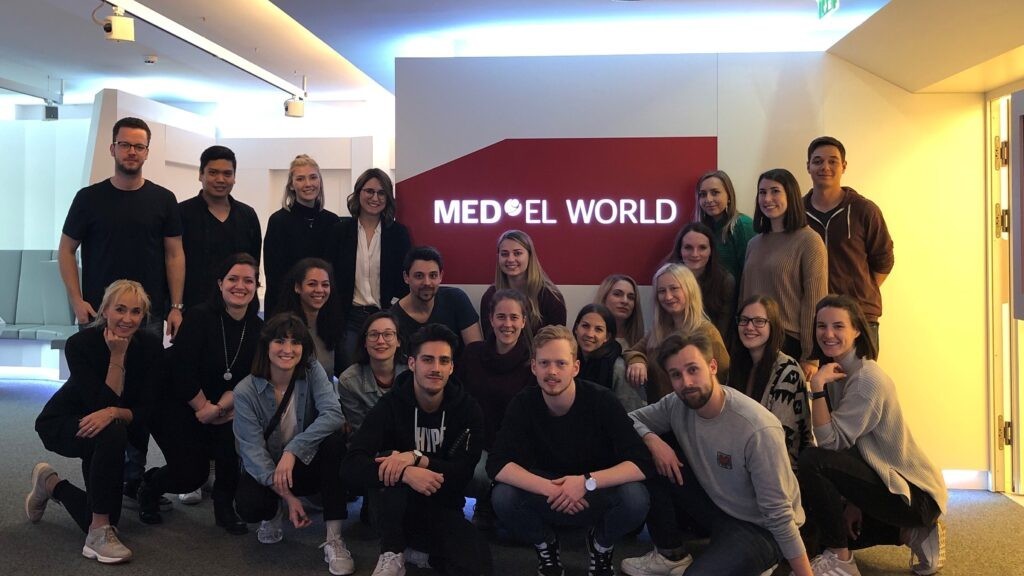
MED-EL is a pioneering medical device company, with around 1,500 employees. The OKR Institute worked with MED-EL to bring Objectives and Key Results to its middle management level. The coaching was led by Dirk Schmellenkamp. The aim was to improve how goals were set, executed, and managed in a part of the organization that plays a crucial role, the layer of managers who connect senior leadership to the teams doing the work. When that layer runs well, strategy flows smoothly. When it does not, things stall. In a company building medical technology, where precision and follow-through really matter, that connective layer carries even more weight.
The Missing Middle Layer
MED-EL had several issues sitting in its middle management tier. The first was a gap in alignment and communication. Strategic priorities and messages did not always pass cleanly between upper management and frontline teams, and middle managers were caught in the middle of that gap. The second was inconsistent goal execution. Middle managers found it hard to set and track goals that were both ambitious and aligned with strategy, so results came out uneven. The third was limited engagement. Without clear, measurable objectives, both managers and their teams felt less ownership, which dragged on performance.
These issues reinforced one another. When communication is patchy, goals drift, and when goals drift, people lose the sense that their work matters. Breaking that cycle meant addressing all three together rather than picking off one at a time.
Investing in the Connective Layer
The OKR Institute designed a focused set of interventions for the middle management layer.
- Customized OKR training for middle managers: We built and delivered training that gave managers the knowledge and tools to use OKRs well within their teams.
- Alignment workshops: We ran workshops to close the gap between upper management's intentions and the way middle managers executed, so goals lined up coherently.
- Tracking and management tools: We put specialized software in place to set, track, and review OKRs, which raised transparency and accountability.
The alignment workshops were especially valuable here, because they brought the strategic intent of senior leaders and the practical reality of middle managers into the same room. That shared conversation closed gaps that memos alone never could.
What Made it Work
- Middle management focus: Investing in the layer that connects strategy to execution addressed the exact point where most strategies come to life or quietly fall apart.
- Shared alignment conversations: Bringing senior leaders and middle managers into the same room closed communication gaps that formal channels had missed.
- Tracking tools for visibility: Specialized software raised transparency so progress was visible and accountability was shared.
- Precision-minded culture fit: The training respected MED-EL's precision-driven environment, making OKRs feel like a natural fit rather than an imposed framework.
What Changed at MED-EL
Stronger alignment
Middle managers could better align their teams' efforts with the company's overall goals, improving focus and coherence in execution.
Better goal setting and tracking
The OKR framework let managers set clearer, measurable goals, leading to more consistent execution and outcomes you could actually see.
More engagement and ownership
The clarity OKRs provided built a stronger sense of ownership among managers, which carried through to higher motivation and performance in their teams.
What This Shows
MED-EL's case puts the spotlight on middle management, a layer that often gets overlooked. Strategy can be clear at the top and effort can be strong at the front line, but if the managers in between cannot translate one into the other, the whole thing wobbles. By giving middle managers OKR training, alignment time, and tracking tools, MED-EL strengthened exactly that connective layer. The takeaway is simple. Invest in your middle managers. They are the bridge between strategy and execution, and OKRs give them a sturdier one to stand on.